
India–EU Free Trade Agreement 2026
The India–EU Free Trade Agreement (FTA) is shaping up to be one of the most consequential trade deals of this decade. Negotiated between India and the European Union, the agreement aims to deepen economic ties, reduce trade barriers, and create new opportunities for businesses on both sides.
Sumit Mitra
1/27/20262 min read
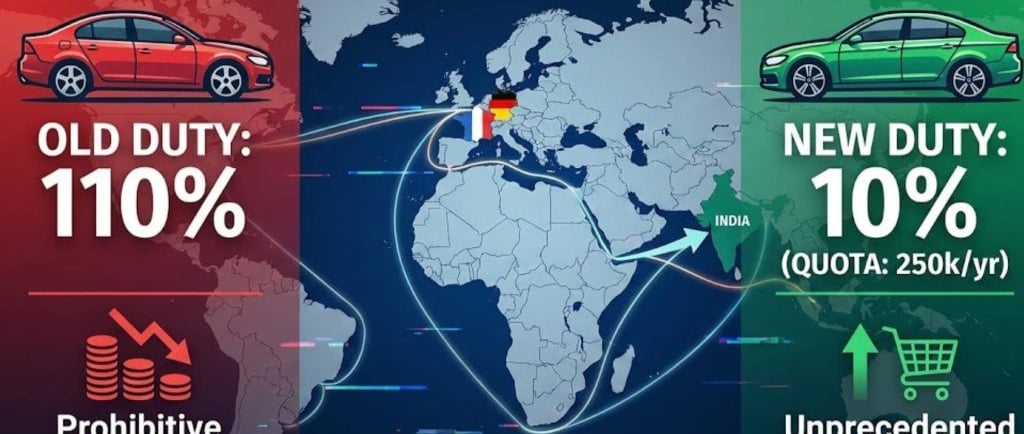
On 27 January 2026, India and the European Union officially signed the long-awaited India–EU Free Trade Agreement (FTA), marking a historic milestone in global trade and economic diplomacy.
After nearly two decades of negotiations, pauses, and renewed engagement, the agreement signals a decisive shift toward deeper economic integration, resilient supply chains, and a shared commitment to sustainable, rules-based trade.
Why the India–EU FTA Is a Landmark Agreement
Strategic Timing
The signing comes amid global supply chain realignments, geopolitical uncertainty, and a growing push for trusted trade partnerships.
Economic Complementarity
India offers scale, talent, and growth momentum, while the EU brings advanced technology, capital, and mature consumer markets—creating a powerful economic synergy.
Beyond Trade
The FTA reinforces long-term cooperation in:
Clean energy and climate action
Digital public infrastructure
Critical minerals and advanced manufacturing
Rules-based global trade governance
Key Features of the India–EU FTA
🔹 Tariff Liberalization
Gradual elimination or reduction of tariffs on a majority of traded goods
Improved market access for engineering goods, textiles, pharmaceuticals, and auto components
Selective and phased liberalization of sensitive sectors
🔹 Services & Professional Mobility
Enhanced access for IT, digital, financial, and professional services
Frameworks for temporary movement of skilled professionals
Recognition mechanisms for qualifications in select sectors
🔹 Investment Protection & Market Certainty
Strong investor protection provisions
Predictable dispute resolution mechanisms
Boost to EU investments in Indian manufacturing and infrastructure
🔹 Digital Trade & Innovation
Rules supporting cross-border digital trade
Cooperation on AI, fintech, cybersecurity, and digital public infrastructure
Balanced approach to data protection and privacy
🔹 Sustainability & Climate Commitments
Alignment with environmental and labor standards
Support for green technologies and clean energy trade
ESG-focused compliance frameworks for exporters
🔹 Manufacturing & Industrial Goods
The FTA is a major win for export-oriented manufacturing:
Increased competitiveness of Indian engineering and auto components
EU firms gain manufacturing and sourcing advantages in India
Strong push to “Make in India for the World”
🔹 IT, Digital & Knowledge Services
India’s services sector benefits from:
Improved access to EU markets
Regulatory clarity for digital services
Expanded collaboration in AI, cloud, and data-driven services
🔹 Pharmaceuticals & Healthcare
Faster approvals and smoother regulatory cooperation
Expanded access for Indian generics in EU markets
Joint R&D and innovation in healthcare technologies
🔹 Textiles, Apparel & Leather
Significant tariff relief for Indian exporters
Enhanced competitiveness against other Asian exporting nations
Large employment potential for MSMEs and labor-intensive clusters
🔹 Agriculture & Food Processing
Selective opening of agri-food markets
Opportunities for processed foods, spices, and specialty products
Continued emphasis on EU quality and safety standards
🔹 What This Means for MSMEs and Startups
The India–EU FTA is particularly transformative for MSMEs:
Easier integration into European value chains
Access to advanced technology and best practices
Increased participation in global procurement systems
Startups on both sides benefit from:
Cross-border innovation partnerships
Venture investments and market expansion
Collaboration in green tech, health tech, and deep tech
🔹 Global Economic and Strategic Impact
The agreement reinforces the role of open trade under multilateral principles supported by the World Trade Organization and sends a strong message against protectionism.
It also:
Diversifies global supply chains
Reduces trade concentration risks
Strengthens India–Europe cooperation in the Indo-Pacific and beyond
India–EU FTA Signed on 27 January 2026: A New Era of Strategic Trade Partnership
Contact
Address: Bengal Eco Intelligent Park, Unit No E1, 11th Floor, Block EM3, Sector V, Salt Lake City, Kolkata-700091, West Bengal, India.
Email: info@logicainfotech.co
LOGICA INFOTECH SERVICES PRIVATE LIMITED
PHONE +91.70032.23525 | +91.98318.11552
© 2026 Logica Infotech Services Private Limited. All rights reserved.
EMAIL info@logicainfotech.com